Showing posts with label nhl playoffs. Show all posts

Friday, June 23, 2017

All Rounds Done, Part Two

Time for some more closing thoughts about the 2017 Stanley Cup Final. Since I already opined about the Nashville Predators who came up short, today's post focuses on the Pittsburgh Penguins, who won the whole ball of wax for the second year in a row.

The blueprint
Last season, the Pens' championship ale was perfected with a brew of scoring depth, team defense, confident goaltending, and veteran leaders whose example was followed by high-performing whippersnappers. This season's was brewed with the same ingredients and strategy, although the steps taken to get it from raw material to finished product appeared quite different.

The 2016 Pens blew opponents out in dominating fashion and controlled the action for long stretches of time, whereas 2017's were usually outshot and often had to deal with their opponents controlling the action for long stretches of time -- yet they managed to win it all anyway, for they knew how to capitalize on opportunities, deal with pressure, and deliver in the clutch.

Last season Phil Kessel, Sidney Crosby, and Evgeni Malkin led the team in playoff points with 22, 19, and 18 respectively; this season they were the league's top three playoff points scorers with Malkin having 28, Crosby 27, and Kessel 23... Last season, rookie Bryan Rust impressed with 6 playoff goals, including the one that won the Eastern Conference Final; this season, rookie Jake Guentzel made an enormous splash by potting 13 playoff goals (second most by a rookie in NHL history) and accounting for 21 total playoff points (tied for the most ever by an NHL rookie).

If you think the above numbers suggest that the Pens scored at an even greater clip this post-season than last, you're not going crazy. Last spring they tallied 73 goals in 24 playoff games and this spring rang up 77 in 25, which works out to an increase of 0.04 per game... And while they had nail-biting victories like 1-0 over Ottawa in Game Two of the ECF, they also enjoyed blowout victories like 7-0 over Ottawa in Game Five, 6-2 over Washington in Game Two of the second round, and 6-0 over Nashville in Game Five of the SCF... All of which puts a big asterisk on my previous remark about them controlling opponents last spring but getting controlled by opponents this spring. Clearly the Pens are a club that has mastered the art of being highly efficient, cashing in chances, and making opponents pay.

And on top of that there was the goaltender factor: Last year rookie Matt Murray took over for injured starter Marc-Andre Fleury and proceeded to play every post-season game steady as a rock, so much so that he seized the role of starter going forward. But this time around, Murray got injured before Game One of Round One, so Fleury resumed his role as starter and proceeded to play every game of the first two rounds plus the first three of the ECF -- and played spectacular, rescuing the Pens several times by delivering victories in games they should have lost.

Murray, by then fully recovered, returned to the net for good in the second period of Game Three and was his usual solid self. And when the klieg lights shined brightest and hottest, he did something remarkable by pitching shutouts in the last two games of the SCF, thus taking a series that was tied 2-2 (and seemed to be tilting in Nashville's favor) and transforming it into a 4-2 Pittsburgh triumph that will appear fairly comfortable when looked at in history books.

Fleury is a 13-season veteran who ranks as Pittburgh's all-time winningest goalie and who has three Stanley Cups, two All-Star appearances, one Olympic gold, and one team MVP to his name. Murray, on the other hand, has played less than two full seasons in the NHL and has already won two Stanley Cups in a starting and starring role, something no other goalie in history has ever managed to pull off.

When you think about everything above, the blueprint the Penguins followed seems invincible. They were the best team this season and were going to win no matter what. Looking at things with the 20/20 vision of hindsight, Nashville never had a chance.


A Best Pen
Let's revisit the matter of Marc-Andre Fleury. If anyone ever makes a list of the all-time best Pittsburgh Penguins, Fleury won't rank #1 and probably won't be close, seeing as how the team's sweater has been worn by players whose names rank among the highest of cotton: Mario Lemieux, Sidney Crosby, Jaromir Jagr, Evgeni Malkin. Nevertheless, Fleury deserves to be on the list and recognized as one of the best Penguins ever.

A partial snapshot of his career success can be found three paragraphs above, and going back to how excellent he was in this year's second round, I will simply quote my own May 11th post: Washington frequently controlled long stretches of play in their offensive zone...They banked 32 or more shots on goal in five of the games and never registered less than 26, whereas Pittsburgh was thrice held to 18 or fewer shots on goal and only twice registered more than 22. For the series, the Caps outshot the Pens by a staggering 229-154. But in the end, none of that mattered...The reason Pittsburgh's superior efficiency was able to make a difference was that Marc-Andre Fleury's goaltending was nothing short of brilliant. He kept the Penguins in games until their snipers were able to ripple the nets and thereby fire darts through Washington hearts. He faced 75 more shots than Washington's Braden Holtby and surrendered fewer goals -- and many of his saves were so spectacular they qualified as grand larceny.

And check out the final three games he completed during this year's Stanley Cup run: A Game Seven shutout of Washington to win that series and a Game Two shutout of Ottawa to even the ECF, sandwiched around an overtime loss in which he gave up just one goal in regulation and finished with a .943 save percentage (i.e., a loss that was not his fault).

Fleury is not the first athlete to become known as a team-first guy, but he is probably the most accomplished athlete to be known more for that personality than for his accomplishments. Ever since he played his first NHL game (for the Penguins in October 2003) he has embraced the city and its fans and made it clear that playing in this town, for this team, was how he wanted to spend his entire career.

Fleury does what is best for the team and never lets his ego obscure the big picture. When he got sidelined by concussions in 2016, it was assumed that he would resume his starting role after he recovered, but the much younger Murray performed so well in relief that Fleury became a back-up after more than a decade as the top dog. He accepted that reality without complaining, and when called upon to fill in he continued to deliver by posting an 18-10-7 record during the 2016-17 regular season and 9-6 mark during the 2017 playoffs.

When Murray returned to the net during the ECF and Fleury was again relegated to back-up duty, he did not complain even though he was largely responsible for having gotten the team that far: He understood the reasoning and kept himself ready in case he was called upon again.

If George Harrison had been a hockey player, he would have been Marc-Andre Fleury, and if Fleury was a musician he would be Harrison: The impactful and influential yet unassuming Beatle, the one who played splendid guitar and composed "While My Guitar Gently Weeps," "Here Comes the Sun," "Something," "Taxman," and "Old Brown Shoe," the one without whom the band could not have been the same and yet was happy to sit in the background while John and Paul got the headlines.

All of which makes current reality suck, even though it should be joyous after Fleury played a major role in the Pens winning their third championship in his time there... for realty is that the NHL has a salary cap; the 32-year-old Fleury has a contract with an annual cap hit of $5.75 million, whereas the 23-year-old Murray carries a cap hit of only $3.75 million; the rules prevent a team and player from ripping up an existing contract and writing a new one even if they want to; there was an expansion draft this week, in which teams could only protect one goaltender from being plucked off their roster by the NHL's new squad, the Las Vegas Golden Knights; and teams have to think long-term, not short-term... some time ago, this reality reared its ugly head and made it clear that there was no logical way for the Pens not to expose Fleury in the expansion draft, which meant that as the season wound down, everyone knew that Fleury's time in Pittsburgh was ending... and sure enough, when the expansion draft happened two days ago, the Golden Knights plucked him away from the city and team he loves.

This is excruciating if you have any emotional bones in your body, and becomes even more excruciating when you consider that Fleury's contract has a no movement clause. Under the rules of the expansion draft, that would have forced the Penguins to protect him, which would put their long-term future in jeopardy considering his age and cap hit and the near certainty that Vegas would have plucked goalie-of-the-future Murray off of Pittsburgh's roster; and so with an eye on that uncomfortable fact of life, the team approached Fleury in February and asked him to waive his no movement clause for the obvious reason. He agreed to do so because he understood the reality, and knew it was best for the franchise that had given him a chance all those years ago, and both sides kept their agreement secret until after the Stanley Cup was won twelve days ago. So yes, just like George Harrison always aimed to do what was best for the music and the band, Marc-Andre Fleury always aims to do what is best for the game and the team.

When players cleaned out their lockers last Thursday and spoke to the media for their final time as the 2016-17 Pittsburgh Penguins, Fleury openly wept. When asked what he would miss most about Pittsburgh if Vegas came calling, he answered with a single word: "Everything."

So yes, the business side of sports sucks, and life itself can suck even when you are standing on what appears to be its pinnacle and your bank account is flush.

Then came this Wednesday, when the Golden Knights picked him on what happened to be the 14th anniversary of the day he was selected by the Penguins in the 2003 entry draft. Fleury walked onto the stage to give what he expected would be "a quick wave," and was caught by surprise when the Vegas crowd erupted in a thunderous and prolonged standing ovation. In a post-draft fan forum, Golden Knights partisans chanted his name and one of them shouted "I love you," to which he responded by saying "I love you too."

The world would be a better place if more people had personalities like that of the high-achieving man from Sorel-Tracy, Quebec, the man whose masculinity is not drawn into question by the fact that fellow players call him "Flower" because that's what his surname means in his native French.


Cros-Mal
Sidney Crosby and Evgeni Malkin are among the best forwards to ever play the game, and they have spent their entire careers in the 'Burgh, They could have gone elsewhere and grabbed higher salaries by playing for teams that wouldn't need to find room under the cap for both of them. And if they played in larger and more media-centric markets like New York or Boston or Toronto, they would likely be getting more endorsement deals than they get playing in Western PA. But they are happy with their status in the City of Bridges and eager to pursue championships above all else, and so they remain.

"Sid and Geno" have a kind of loyalty that is in line with Marc-Andre Fleury's. Wedded to their long-term team success -- eleven straight playoff appearances, five trips to the conference finals, four conference championships, and three Stanley Cups including the first back-to-back Cups of the cap era -- that kind of loyalty will make their names go down in history much deeper than if they had left for other digs.

They are an interesting tandem. Both are superb shooters and superb passers, though Malkin is known more his sniping shots and Crosby more for his artful passes... Though known for speed and skill rather than fisticuffs, they are both (especially Malkin) more than willing to throw punches and get their hands dirty when the situation warrants it... Their offensive prowess has gotten so much press over the years that their defensive prowess goes almost unnoticed; however, if you pay attention to their defensive play you will see that it (especially Crosby's) is outstanding.

I mention Crosby and Malkin because how can I not? As good as they are as individual players, their careers are joined at the hip. As true as it is that this Penguins team would not have won the Cup without Fleury's brilliance against Washington, it is also true that they would not have won it without the scoring and leadership of the centermen from Cole Harbour, Nova Scotia and Magnitogorsk, Russia. Despite how long they have played -- their careers are already approaching three times the length of the average NHL career -- they are still in their primes, having just finished 1-2 in points for this year's playoffs and with Crosby having led the league in goals during the regular season.

Previous generations were blessed to see Gordie Howe and Ted Lindsay play simultaneously for the Red Wings, Stan Mikita and Bobby Hull for the Blackhawks, Bobby Orr and Phil Esposito for the Bruins, Mike Bossy and Bryan Trottier for the Islanders, Wayne Gretzky and Mark Messier for the Oilers, Mario Lemieuz and Jaromir Jagr for the Penguins, Steve Yzerman and Sergei Fedorov for the Red Wings, and Joe Sakic and Peter Forsberg for the Avalanche. Right now we have Crosby and Malkin to watch, and they right rank there with those other tandems.

It is often hard to appreciate something while it is happening. Appreciation usually comes only with benefit of hindsight. Hopefully, hockey fans today, even those who are Pittsburgh-haters, realize how special it is to watch Crosby and Malkin skate for the same organ-eye-zation.


Dynastic
As noted above, these Penguins are the first team to win back to back Cups in the salary cap era. Surely you've heard they are also the first team to pull off back to back Cups since Detroit a couple decades ago, back in 1997 and 1998.

And of course, the Penguins also won the Cup in 2009 (and went to the SCF in 2008) with some of the same important pieces that made up 2017's puzzle.

So do they count as a dynasty? I think so, especially when you consider how different the league is today than it was in the past.

And are they the best "modern" dynasty? There is certainly a fascinating debate to be had there, when we also have this decade's Blackhawks and the 1990's-2000's Red Wings and 1990's-2000's Devils to choose from. But I will save that debate for another time and another post, because I have said more than enough for today.

This was an outstanding Pittsburgh Penguins team and what they did will go down in history. It was fun to watch.


Friday, June 16, 2017

All Rounds Done, Part One

Just like that, it was done. The Stanley Cup Final was suddenly over and the Pittsburgh Penguins were once again the champs.

Below are some thoughts about the 2017 SCF now that it has come to an end, and rather than do one post I will do two: This one focuses on the Nashville Predators who came up short, and the next will focus on the Penguins who came up big.

The Whistle
First, let's put to bed the matter of "the whistle," since it has been subjected to vitriol not just from Predators fans but from the unfathomably large population of Pittsburgh haters that lives from coast to coast.

A minute into the second period of the decisive Game Six, with the score tied at zero, Filip Forsberg fired a shot that Matt Murray stopped. From the spot where referee Kevin Pollock was watching, Murray appeared to have also caught it. Unable to see the puck, Pollock did what refs are supposed to do when it's not in the net and they can't see it in the crease: He blew the play dead.

It's almost certain that Pollock thought Murray was holding the puck, but he wasn't. Murray was turned almost perpendicular to the goal line, and the puck landed on the other side of his frame so that his own body blocked it from Pollock's view. Nashville's Colton Sissons saw it sitting there and managed to make a move and jab it home -- but not until an instant after the whistle sounded, and thus there was no goal.

To recap: The call was in keeping with the rules and therefore was not wrong. But it still sucked, and royally so, because Pollock blew the whistle so quick. If I was reffing I would have spent more time looking for the puck before deciding I couldn't see it. I would have at least tried to get a view from another angle. However, none of that changes the fact that the call was per the rules.

Regardless, the main purpose of this segment is not to say that the call was legalistically correct; it is to point out that the call was not the reason Pittsburgh won and Nashville lost on Sunday. Pollock called the play dead with two-thirds of the game left to play, and then he and the rest of the officiating crew more than made up for it by allowing the Predators to ignore the rulebook for the rest of the night. The Predators, including sainted Pekka Rinne, committed many obvious penalties and literally were not called for even one of them.

Every single power play after Pollock's whistle (and even before it) belonged to the Preds, including a stint of 5-on-3 during the third, yet they barely generated any chances during all those golden gift-wrapped opportunities. Do I really need to point out that that is not how a champion performs when everything is on the line? A champion does what Pittsburgh did: Rise up and snuff out its opponent's chances. Hence, Pittsburgh is a champion and Nashville is not. Sounds harsh, is true.

A radio host here in Tampa who is extraordinarily knowledgeable about hockey, and who was openly rooting against the Penguins, moaned on Monday that the Preds "never recovered" from the blown-dead call. That sentiment has been echoed across the fruited plain. Here's my problem: A championship team is, by definition, a team that will not lose over one crap-luck call that happens when two-thirds of a game remains to be played -- especially when the overwhelming majority of calls throughout the game go for them rather than against them, and when they get four power plays and their opponent gets zero. Champions capitalize on at least one power play when the grail is in sight. Champions take the one crap-luck call and use it as gas to pour on their competitive fire, and as a result that fire burns so hot it scorches the earth and leads them away from defeat and straight to victory.

The '85 Bears, '99 Rams, Joe Montana 49'ers... 1980's Miami Hurricanes, 1990's Nebraska Cornhuskers, 2010 Auburn Tigers... 2002 Red Wings, Gretzky-Messier Oilers, LaFleur-Dryden Habs... Can you imagine any of those teams wilting and losing due to one shitty-but-not-wrong call not going their way? Of course not, because wilting and losing over spilled milk is the opposite of what champions do. Champions wipe up the milk and burn down the kitchen.

A team capable of getting derailed by a lone unfavorable call early in a contest is a team not capable of winning a championship -- at least not yet. I believe that even if Sissons's goal had stood, the Penguins would have found a way to win on Sunday. I suspect this series wasn't going to a seventh game no matter what, especially when you look at how the Penguins kept improving all the way from the beginning of Game One through the end of Game Six.


Which is not...
...to take anything away from the Spring 2017 edition of the Nashville Predators. These Preds were a great group of guys supported by a great swath of fans, and they accomplished a lot and I loved watching them play. Their future is bright and they may yet get to drink from the Cup.

They and their fans should realize that before the Gretzky-Messier Oilers became the dynasty remembered for winning five Cups in seven years, they reached the SCF and got swept by a New York Islanders squad that had won the three previous Cups. Sure, the Oilers were overflowing with Hall of Fame talent in 1983, but those future Hall of Famers needed to have their asses handed to them by champions in order to learn how to become champions themselves.

The 1993-94 Red Wings had the best record in the Western Conference, but got bounced in the first round of the playoffs by bottom-seeded San Jose... The following year they had the best record in the entire NHL, only to get swept in the SCF by fifth-seeded New Jersey... And the year after that they had the best record in NHL history, yet failed to even make it to the SCF because they fell in the third round to eventual champ Colorado... It was not until the year after that, in their fourth kick at the can, that those Wings finally broke through and won it all -- and today, all anyone remembers about that era is that the Wings won back to back Cups in '97 and '98 and three Cups in the five calendar years from June '97 through June '02.

Your time may come, Nashville... or it may not, since sports are capricious... but there is more reason for you to be happy and optimistic than there is for you to be sullen and cynical, so you should seize the former mindset as you skate into next season.


Depth and youth
One of the Penguins' defining traits during their consecutive title runs has been how deep their talent runs, and how their resulting ability to get bushels of goals from anywhere on their roster makes them so hard to put away. Well, if these playoffs taught us anything, it's that the team from Music City is almost as strong in that regard.

We all knew coming in that the Preds were deep on the blue line, but most of us thought their forward depth was not remarkable, and boy did we find out we were wrong! Yes, there is the oft-cited fact that the Preds' 14 game-winning goals during the playoffs were scored by 12 different players -- but then there is the less-cited fact that 19 different Preds, including 15 forwards, scored goals for them during the playoffs (nearly equaling the all-time record of 21 players and 16 forwards, which was set three decades ago by the '87 Flyers).

Of their eight players who recorded double-digit points in the playoffs, four are under the age of 25 and the oldest (P.K. Subban) is just 28. Their three highest scorers from the regular season (Viktor Arvidsson, Ryan Johansen, and Filip Forsberg) are 24, 24, and 22, respectively, and all three of them were impact players during the post-season as well, as Forberg led the team with 16 playoff points and Arvidsson and Johansen finished tied for third at 13. Damn.

The depth gets even more impressive when you consider the unlikely stories of Pontus Aberg (who has the coolest name in sports) and Frederick Gaudreau... Prior to this post-season, the 23-year-old Aberg had played in only 15 NHL games and scored only one NHL goal; but then he tallied three assists and two goals in the post-season, including what was arguably this year's best playoff goal of anyone from any team, plus the game-winner in Game Five of the Eastern Conference Final... Meanwhile, prior to this post-season the 24-year-old Gaudreau had played in only nine NHL games without scoring a single goal; but then he bagged three goals in the Stanley Cup Final, including the game-winners in the only two SCF games the Preds won... I don't believe this is coincidence. I believe there is something special and infectious in the team's culture, something that infuses everyone who enters that locker room and laces up skates and pulls on a sweater emblazoned with a saber-toothed cat.

If you're on the Nashville bandwagon, you gotta be enthused by demographics like those above, for they provide ample reason to believe your team will be a competitor well into the foreseeable future.


But be that as it may..
...it would be unwise for the Preds and their fans to take their eye off of Father Time, for he is undefeated and lurks in the locker rooms of all teams... and he is on the prowl with a chance to take out key contributors even on this impressively young club.

No matter how much we talk bout Nashville's balanced scoring and well-oiled defensive corps, we all know that goaltender Pekka Rinne was their best player during their playoff run, and we all know they wouldn't have gotten so close to Xanadu without him playing so spectacularly. Rinne will turn 35 before Thanksgiving gets here, and while I believe he has a few more good years in him, there's no denying that he is at the age where Father Time could pounce at any time and make his skills deteriorate drastically.

Should Father Time strike Rinne, to whom will the Preds turn to protect their net? Do you really believe Juuse Saros has what it takes to deliver a title, to steal wins against contenders when the Preds' skaters are struggling to score?

Father Time is also breathing down the neck of team captain Mike Underwood Fisher, who turned 37 last week and has now logged 17 seasons in the NHL. You won't find Fisher putting up Arvidsson-like stats these days, but you will find him doing tons of other things that are vitally important for a team to contend. He is a force in the face-off circle, blocks shots, sets up teammates, and provides invaluable leadership. His steady character (he's an avowed Christian who exhibits calm in the midst of storms) affects teammates in positive ways and is the kind of thing that can make a difference in the clutch.

Fisher's contract ends at the end of this month and there is no doubt that if he plays in the NHL next year, he will once again do so for the Nashville Predators. But what if he decides to hang up his skates instead of signing a new contract? What if he does sign another contract, only to have Father Time strike in the near future and render him unable to contribute like before?

The Predators' youth is impressive and suggests they will be competitive for a long time... but their chances of winning it all will go down if Rinne and/or Fisher are no longer as effective as they have been... in fact, their chances will go way down if Rinne is the one whose effectiveness takes a big drop... and so it would behoove the Predators to keep the pedal to the metal and keep pushing to win now, rather than listen to the Sirens who sing about the promise of "the future."


In closing...
...you were a great story, Nashville/Smashville, and you should continue to be, but the Penguins were better... and although a fine line is thinner than gossamer, it is still a line, and the difference between "almost there" and "there" is simultaneously tiny and huge... and while on the one hand that sucks, on the other hand it means you had a helluva run... you were not best-in-the-world material this spring, but you were second-best-in-the-world material, and that ain't bad.

Saturday, May 27, 2017

Three Rounds In

Some more thoughts on the 2017 Stanley Cup Playoffs, now that the conference rounds are done and the Stanley Cup Final is set:

Nash-Pitt
Music City versus Steel City. The 'Ville from the South versus the 'Burgh from the North. Two great hockey markets, one of which is the oldest in the United States while the other is in only its second decade among the pros. Two loud and cocksure fan bases. Two teams loaded with speed and skill.

This is the SCF everyone not from Ottawa or Anaheim wanted to see, or should have, and I am glad we get to see it. The only way I could be happier is if my Tampa Bay Lightning had made it instead of the Pittsburgh Penguins, but 'twas not meant to be this year.


The "Old Guys"
In my May 11th post I gave shout-outs to some of the non-whippersnappers who have excelled in these playoffs. Today I am going to follow that up by pointing out that the best player in the ECF was 36-year-old Craig Anderson, and by pointing out that the best player in Game Seven was 37-year-old Chris Kunitz, who scored the first goal and then scored the winner 5:09 into the second overtime. Kunitz also set the screen of Anderson that enabled Pittsburgh's other goal, which was scored by Justin Schultz.

What does this mean? Mostly, it means I get to quote Fred Sanford -- "Old! Who you callin' old?" -- in back to back hockey posts. I have to be the only person on Earth who has ever done that!

f63284937335550a744247ce992ba6dc.jpg (480×360)


The Housley Effect
Phil Housley was one of the best defensemen of his era, a fact that gets overlooked because of how often his offensive stats are cited. The 1,232 points he tallied made him the highest-scoring American player at any position in NHL history, and today, a full 14 years after he played his final game -- 14 years of unprecedented numbers of Americans excelling in the league -- only one person has managed to pass him on that list.

Where was I going with this? Oh yeah: Phil Housley has been an assistant coach for the Nashville Predators since 2013, and his mark is firmly imprinted on them as they enter the SCF for their first time ever.

He is a Hall of Fame defenseman, which tells you he ain't the kind of person who believes you should ever ignore your defensive responsibilities, but a big part of his philosophy is summed up by the old adage that the best defense is a good offense. What better way is there to defend against an opponent than by getting the puck out of your end and moving it to their end, then sapping their energies by preventing them from exiting and by generating scoring chances and applying constant pressure? The Predators' defensive corps executes that philosophy to the hilt up and down its depth chart, and it is a major reason they won the West.

Nashville's top four D'men -- P.K. Subban, Mattias Ekholm, Ryan Ellis, and Roman Josi -- are among the best in the world when it comes to moving the puck and passing it and creating points. Three of them (Subban, Ellis, and Josi) were among the team's top five scorers this season, despite the fact that the team has lots of good forwards. This is not by accident or mere coincidence.

Housley will tell you he is fortunate, that he is blessed by being able to coach talented blueliners such as these. They will tell you they are fortunate, that they are able to excel because Housley communicates a philosophy with which they agree and he trusts them to put it into action -- because he gives them the green light to use their skills, rather than trying to put a leash on them like so many coaches prefer to do with players.

There is some truth to both, and Ellis summed it up nicely when he recently said: "Phil has been awesome. Since Day One he came in here, I think for a lot of the D he was a similar player as the way he thought the game...it's easy to listen to a guy like that and take what he has to say and understand it and learn from it."

The bottom line is that one of the main reasons the Preds are fun to watch is that they have a group of dynamic players at a certain position, who are able to execute a dynamic style preached by a coach because they and he embrace the same vision. Enjoy watching them play over the next 9 to 18 days, before this season moves into the history books.


The Veteran Effect
The Pittsburgh Penguins play an uptempo style with lots of urgency, but never seem desperate or panicked. There is a tinge of serenity about them that seems inconsistent with the game itself and especially with their pace of play. This comes largely from their veteran presence and the personality of their longtime captain, Sidney Crosby.

Contrary to what media profiles might make you think, Crosby should not be confused with an angel or saint. He hits hard and doles out his fair share of calculated slashes and cross-checks. Still, his game is based on skill without goonery and he never lets opponents get under his skin even when they play dirty (see Senators, Ottawa; ECF, Game Six). Watch Crosby on the bench and he is collected. Watch him in interviews and he comes off calm and even-keeled, as the kind of man who keeps everything in perspective. Seeing as how he is the Pens' leader and has everyone's respect, his demeanor certainly rubs off on others.

He and Evgeny Malkin are superstars in their twelfth and eleventh seasons in the NHL, respectively, and they have never played for another team. This is their fourth trip to the SCF and they won the Cup their last two trips. They continue to shine despite their supposedly advanced ages, with Crosby leading the league in goals this regular season and Malkin's 24 points during this postseason (7, 17) being more than anyone else in the league.

The aforementioned Chris Kunitz is now in his ninth season with the Pens. He has been to the SCF three times before (with the Pens in 2009 and 2016, and Anaheim in 2007) and won the Cup each time.

Marc-Andre Fleury is in his thirteenth season with the Pens, and like Crosby and Malkin has never suited up for another franchise. Although he lost his starting job to Matt Murray after getting injured last year, he is the winningest goalie in team history and won the Cup as their starter in 2009. When called on this postseason after Murray got injured, Fleury played like a Conn Smythe winner and was the team's best player through the first two rounds. Without him acting as their backstop, the Pens would not have made it past the second round.

Trevor Daley (thirteenth year in the league) returned from injury late in the the ECF, and when he did, Pittsburgh's defensive play sharpened instantly and noticeably all along the blue line.

Getting back to the matter of Malkin being the NHL's leading points scorer this postseason, I feel compelled to mention that Crosby is second on that list with 20 (7, 13) while one of the two players tied for third is another Penguin: Phil Kessel. Though Kessel (7, 12, 19 this spring) is in only his second year with the Pens, he has been one of the NHL's best scorers for eleven years and was the Pens' best player during last year's postseason title run. Of the 231 NHL players who have appeared in 50+ playoff games over the decade-plus that Kessel has been in the league, he ranks first in goals per playoff game.

This high degree of certainty, dependability, and successful history among Pittsburgh's veteran core acts like a car battery that charges itself while running the engine. The veterans know what to do and act like it, the young players see that and emulate it, and results follow. It is not by accident or mere coincidence that young guys like rookie Jake Guentzel and second-year winger Bryan Rust have made an impact in the 'Burgh this spring.


Prediction
The Penguins are insanely deep when it comes to forwards, the Predators when it comes to defensemen. The Penguins' injuries are concentrated on their blue line, the Predators' among their forwards. The Penguins have an outstanding young goalie who already has a ring and has shone in the three games since he returned from injury, while the Predators have an outstanding graybeard who has played like a Conn Smythe winner ever since the playoffs began.

In other words, this is a compelling and evenly matched SCF, so I am simply going with my gut. Because my eyeballs have been telling me the Predators look like a team of destiny, I predict they win it all. In six games. Which means they will lift the silver chalice in front of their home fans and the scene up and down country music's Broadway will become the stuff of legend. A big part of me thinks that would be a truly great thing.

But an equally big part of me thinks about the long-lived excellence that so many of Pittsburgh's players have been able to sustain, and admires the hell out of it. That part of me believes it would be a truly great thing for those guys to get their names engraved on the chalice again to further cement their legacy, to make their greatness undeniable. Three championships across nine years would place the Crosby/Malkin Penguins ahead of the Brodeur/Stevens Devils, who also won three in nine but did so before the salary cap.


Random Stuff
Mike Sullivan was born in Marshville, Massachusetts and Peter Laviolette in Franklin, Massachusetts. That makes this the first SCF in which both head coaches are U.S.-born.

Game Seven of the ECF was one of the better Game Sevens in years.

The Predators' twelve game-winning goals through the first three rounds were scored by eleven different players. How's that for balance?

I was planning on dedicating part of this post to defending the character of the Anaheim Ducks, and another to defending the quality of Ottawa's play and dedication of Ottawa's fans -- but I've already gone long so I'll save those topics for another post (maybe).

Here is proof that P.K. Subban does not neglect his defensive duties, and that he in fact meets and exceeds them in the manner you would expect from one of the world's best defensemen.

Here is a brief and incomplete yet very informative article about the history of the playoff beard.

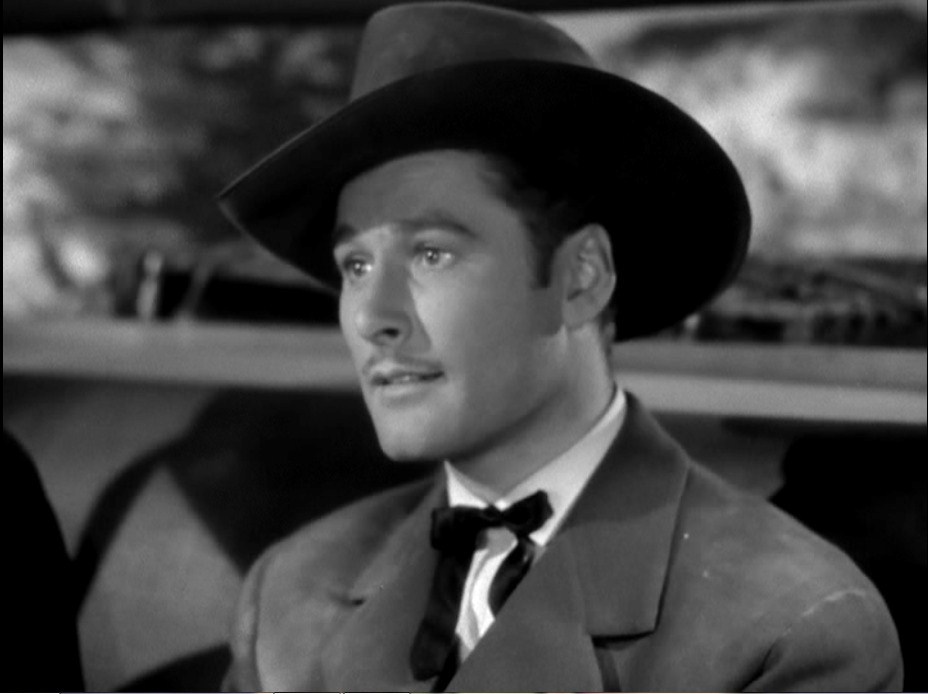
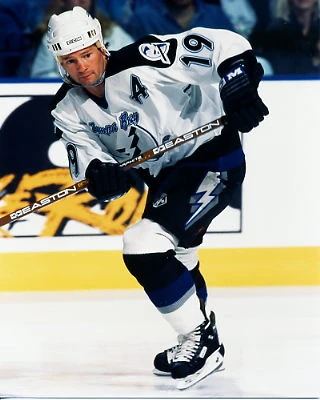
And lastly, am I the only one who thinks Filip Forsberg could pass for Errol Flynn? Should someone check to see if the swashbuckle thespian was gallivanting around Sweden back when Forsberg's grandmother was of childbearing age?

27bdd509796e77a021875356792a6fdd.jpg (236×354)


bdh-flynn-city-2.jpg (928×694)


Thursday, May 11, 2017

Two Rounds In

Some more thoughts on the 2017 Stanley Cup Playoffs, now that the second round is in the books:

The "Old" Guys
From Kucherov to Tarasenko, to McDavid and Eichel to Matthews and Laine (to name but a few), the NHL has recently been blessed with an influx of extremely young players with extremely high-end skills. Tons of ink has been spilled on this topic and rightfully so.

But the sheer volume of ink (combined with a weirdly worshipful attitude toward youth being displayed in venues like Puck Daddy) has created a false impression that hockey players peak a couple years before they turn 25 and are well past their primes before they turn 30. Fortunately, these playoffs are providing plenty of antidotes to that way of "thinking."

Pekka Rinne and Marc-Andre Fleury are the highest performing players so far this postseason and their ages are 34 and 32, respectively.

Evgeni Malkin's 18 points this postseason (5 G, 13 A) are more than anyone else. He turns 31 in July.

Yes, 20-year-old Connor McDavid was the NHL's leading scorer in the regular season and is sure to be named its MVP at the awards show next month -- but in the second round of the playoffs, he was neutralized by 32-year-old Ryan Kesler whenever they were on the ice at the same time.

Again, McDavid was the NHL's leading scorer in the regular season and is sure to be named its MVP at the awards show next month -- but in the battle between his Edmonton Oilers and the Anaheim Ducks, the latter's 31-year-old Ryan Getzlaf was, in the words of TSN's Frank Seravalli, the "best player in this second-round series -- and it isn't even close."

A player racing past an opponent's defensive corps, then deking the opposing goalie and slipping the puck through his five-hole to score, is not unheard of -- but Pittsburgh's Matt Cullen is forty and he did that to break a scoreless Game Two tie against Washington when Washington was on the power play!

Like Fred G. Sanford once protested: Old! Who you callin' old?


Pens-Caps
It had to go like this, just had to... Penguins versus Capitals in Round Two for the second straight year... with the Caps having the best record in the league for the second straight year, yet the Pens being the defending Stanley Cup champs... and the Pens taking the series of course, this time via a Game Seven shutout in the Caps' building, just for kicks.

The history of Washington's playoff futility against Pittsburgh over the years, and their inability to get past the second round during the past decade despite being a perennial Cup contender, has been written about time and again. However it felt like the script might be different this time, because the Caps seemed to dominate every game and their youngsters Evgeny Kuznetsov and Andre Burakovsky seemed oblivious to pressure.

Washington frequently controlled long stretches of play in their offensive zone. They had dominant possession numbers and controlled 61.5 percent of the shot attempts at 5-on-5. They outshot Pittsburgh in literally every one of the seven games, often by wide margins. They banked 32 or more shots on goal in five of the games and never registered less than 26, whereas Pittsburgh was thrice held to 18 or fewer shots on goal and only twice registered more than 22. For the series, the Caps outshot the Pens by a staggering 229-154.

But in the end, none of that mattered. The Pens' quality depth was so good that whenever they found an inch, they took a mile and put the puck in the net no matter which line was on the ice -- such as in Game Two, when they netted 6 goals on 17 shots while the Caps managed just 2 on 36,  and in Game Four, when they were outshot 38-18 but won 3-2.

And let's face it: The reason Pittsburgh's superior efficiency was able to make a difference was that Marc-Andre Fleury's goaltending was nothing short of brilliant. He kept the Penguins in games until their snipers were able to ripple the nets and thereby fire darts through Washington hearts. He faced 75 more shots than Washington's Braden Holtby and surrendered fewer goals -- and many of his saves were so spectacular they qualified as grand larceny.


Makes you go hmmm...
In his first year as head coach of Tampa Bay, Guy Boucher had the Lightning in the Eastern Conference Final. Now in his first year at the helm in Ottawa, he has the Senators in that same position. This means that in fewer than four full seasons as an NHL head coach, Boucher has twice reached conference finals -- not bad for a 45-year-old scarface who never played in the league and has degrees in history, biology, and agricultural engineering.

Bryan Rust's winning goal in Game Seven on Wednesday marked the eighth time in his two-year career that he's recorded a point in an elimination game.

Prior to this year, Justin Williams was 7-0 in Game Sevens and known as "Mr. Game Seven" -- but now he plays for the Capitals, which means that streak has gone the way of the dodo.

Although there has been incredible depth of superb goaltending this postseason, there have already been 21 games in which teams came from behind to wipe out deficits of two or more goals.

After an outstanding Round One, Henrik Lundqvist fell a ways back toward Earth in Round Two. There was nothing he (or any other netminder) could have done to stop Jean-Gabriel Pageau's two late goals that forced overtime in Game Two, but be that as it may, there is no getting around the fact that Lundqvist wound up on the losing end of two games in which his team scored 4+ goals on the road. His numbers were still impressive for the two rounds -- his .927 save percentage ranks third among the 21 goalies who have logged ice time these playoffs -- however his window is closing and now he needs stout defenders in front of him more than ever.

Many people (including me) thought it was silly for Ottawa to adopt a "win right now" strategy this year when they didn't make the playoffs last year, didn't seem good enough to scare anyone, and are financially strapped. But after one go-round with Dion Phaneuf, Derick Brassard, and Alex Burrows on their roster, it's hard to laugh at the Senators now.

Am I the only person who can't see Drake Caggiula's name in print without thinking that the surname is Calligula?

In their entire franchise history, the Penguins have never lost a Game Seven on the road (they're 6-0 after Wednesday).


I call on...
...the league to crack down on embellishment next season, and to make its crackdown severe and obvious.

...the Anaheim crowd to behave in every game of the WCF just like you did in Game Seven on Wednesday.

...Edmonton fans to not spend the next twelve months bitching about non-reversals as they relate to goaltender interference non-calls. You've got nothing on Buffalo fans circa 1999.

...Nashville fans to continue showcasing just how great a hockey market your city is.

...Corey Perry to stay out of the crease.


And...
...that's enough for now, other than my prediction, which is this:

Erik Karlsson will have a great ECF but it won't be enough to overcome Pittsburgh's depth, even though Pittburgh's blueline is depleted... and meanwhile the Ducks will be their provoking and annoying selves in the WCF, but it won't be enough to overcome Pekka & the Preds, who are playing like they're destined to win the West and perhaps more... and so, we will have Pittsburgh-Nashville on stage in a couple weeks.

Bring it on!


Tuesday, April 25, 2017

One Round In

Some thoughts on the 2017 Stanley Cup Playoffs, now that the first round is in the books:

No Sevens?
Is it just me, or does it seem strange that none of the first round series went seven games? It seems like there are usually a couple that do... but the lack of sevens does not mean there was a lack of drama, for overtimes were aplenty, especially in the breakneck series between Washington and Toronto which saw five of its six games go to OT.


The King is Back
Two years ago, Henrik Lundqvist was his usual unflappable post-season self as he backstopped the New York Rangers to within one game of what would have been their second straight Stanley Cup Final.

But one year ago he looked horrible when the Rangers were eliminated by Pittsburgh in the first round. He surrendered 4.39 goals per game, recorded an abysmal .867 save percentage, and was pulled from the net three different times. Then he followed that up with the worst regular season of his career -- a regular season during which he turned 35, so it's obvious to see why many observers, myself included, suspected that his status as an elite goaltender had come to an abrupt halt.

But when the puck dropped to start these playoffs, the determined Swede donned his armor and wielded his sword and proved us wrong. Throughout this season's first round, Lundqvist rang up an eye-popping .947 save percentage and 1.70 GAA, and based very largely on those sinews his Rangers vanquished the Atlantic Division champion Habs, who were also backstopped by a goalie who is considered a creme de la creme generational talent.

Montreal's top five scorers, combined, only managed two goals against Lundvist for the entire six-game series. Their top scorer, Max Pacioretty, did not score at all against him.

It's good to know there is something you can count on, like snow in Tahoe and sunshine in San Diego and the swallows returning to Capistrano. The eleven days from April 12th through 22nd assured us that Henrik Lundqvist excelling when it matters most is one of those things.


Between the pipes
Defense wins championships everywhere. In hockey, goaltending wins 'em even more so. If you want to see just how important the goalie position is, look not only to Lundqvist in New York but also to the men between the pipes in St. Louis and Nashville.

Last year the big question in St. Louis was which one of the goalies in the Blues' well-performing platoon they would choose to keep. Now that they've dispatched the Minnesota Wild, it is obvious they made the right decision opting for Jake Allen over Brian Elliott. Although the Wild soundly outplayed them in the series, averaging 10 more shots per game and out-Corsi'ing them 60.11 to 39.89, the Blues prevailed in five games and never appeared to have any doubt that they would prevail. That is a direct resut of stellar goaltending.

Meanwhile, in Music City, Pekka Rinne spent the first round performing like some cyborg combination of Plante and Tretiak and Hasek all in their primes. Chicago entered the series not only a mere 22 months removed from their second Cup in three seasons, but still in their prime and sporting the best record in the Western Conference -- only to find that Rinne has suddenly become impregnable. The 34-year-old Finn did not allow a goal until Game Three, pitching shutouts in both road games and logging a supernatural .976 save percentage. He even tallied a pair of assists, thus equaling the points production of star Blackhawk forwards Patrick Kane and Jonathan Toews. And just like that, the top-seeded Blackhawks were not only eliminated from the dance but swept from the dance, like a helpless puck slapped into the corner by a kick save.

I've been watching hockey for decades and do not recall a goalie having as dominant a series as Rinne just did. If he has another one like that, he will be so far ahead in the Conn Smythe conversation that he'll be lapping the field.


Bring it on
By which I mean, the about-to-commence series between the Penguins and Caps. Nothing says Eastern Conference playoffs like these two facing off -- and as everyone knows, nothing screams shrink's couch any louder than a Washington Capitals hockey club entering the second round and seeing the team in yellow and black lining up across the red line.

To be sure, Washington's playoff fragility, whether real or perceived, goes much deeper than the ground beneath Pittsburgh. For a decade now the Caps have been an elite team that is always talked about as legit Cup contenders (and often as the Cup favorite) yet they have not gotten past the second round in all that time. They were the top seed in 2010, but lost to bottom-seeded Montreal. A year later they were again the top seed, but got swept by Tampa Bay. And they dropped three consecutive Game Sevens to the Rangers.

But their playoff submission to Pittsburgh stretches even farther back. The teams have met nine times in the post-season since 1991, with the Penguins winning eight of the nine series despite having trailed in eight of them. Last year might have been the biggest mic drop, seeing as how the Caps had by far the best record in the NHL only to have the Penguins eliminate them in the second round en route to winning the Stanley Cup.

On an individual basis, Pittsburgh's Sidney Crosby and Washington's Alexander Ovechkin began their NHL careers in 2005, have never changed teams, and are considered the top two hockey players on Earth across that period of time. However, across that period Crosby has two Stanley Cup rings and two Olympic gold medals testifying to his greatness, while Ovechkin has not touched the Stanley Cup and has not won an Olympic medal of any type.

Will this be the year things change? The Caps again have the best record in the NHL, so they are again favored against the Pens and again have home ice advantage. But does that make their chances better or does it invite the kind of psychology that makes their chances worse? I can't wait to find out.


et ceteras
If Nashville makes a run to the Finals (and especially if they win the Cup once there) it should be a marketing gold mine for the NHL. The Predators are a model franchise with a fervent fan base; Carrie Underwood comes to their games because she is married to their star centerman, Mike Fisher; and the most charismatic star on this Deep South team is P.K. Subban, a black man. A marketing gift such as this would be like manna from Heaven -- so rest assured that if the gift is given, Bettman & Co. won't take advantage of it and NBC will short-sightedly sulk that Anaheim (LA!) didn't win the West.

I am experiencing cognitive dissonance. I have long thrown barbs at the Maple Leafs organization and its fans, and especially at the propaganda pawns who pretend to be objective journalists while obsequiously praising the Leafs franchise -- which hasn't won a Cup in 50 years -- as the pinnacle of the world of hockey. Nonetheless, I found myself guiltily rooting for their plucky roster of youngsters after the playoffs began, and I found myself admitting that the Leafs contending is good for the game. This goes against everything I believe, and I am slapping my head over it.

No matter what I said in the above paragraph, if the Leafs ever face the Lightning in the post-season, I hope they get blown out four straight games and become a laughingstock. I hope Victor Hedman shuts down Auston Matthews, and Anton Stralman intercepts every pass Mitch Marner attempts.

Ryan Kesler versus Connor McDavid. The pesky irritant from Michigan versus the poetic icon from Ontario. This is the individual battle, the game within the games, that I most want to watch this round... Kesler's Anaheim Ducks are the veteran squad aiming to hoist the Cup before their window closes, while McDavid's Edmonton Oilers are a youthful bunch hoping to bring it back to Alberta for the first time since 1990; but it's the individual clash between these two forwards that I am most eager to watch, for you know Kesler will be sent out to badger defend against the phenom who dazzled with 70 assists and 30 goals this season.

Derick Brassard versus Mika Zibanejad. This is the individual battle I most want to watch in the East. Granted, it's not technically an individual battle because it's not like the one will be sent out to defend against the other. But they were traded for each other in the offseason, with Brassard going from New York to Ottawa and Zibanejad going from Ottawa to New York; and with the Rangers and Senators facing one another this round, it will be impossible not to compare and contrast... Ottawa wanted Brassard specifically because of his history of playoff production, and after a ho-hum regular season he made them look like geniuses by leading the team with eight points during their six-game playoff win over Boston. Meanwhile, down in the Big Apple, Zibanejad proved that he too knows how to deliver when it counts by scoring the overtime winner in Game Five and assisting on the the game-tying goal in what turned out to be the decisive Game Six.


And with that...
...I need to put down my pen stop typing. Bring on the games!


Sunday, May 29, 2016

Three Rounds In

Now that the conference champions are known, here are some of my brain droppings about the Stanley Cup Finals that lie ahead.

Actually, the first two brain droppings are not, technically speaking, even about hockey, but when two teams square off for a championship it makes sense to say some things about where they come from. In this case, both cities are very underappreciated slices of America's great big apple pie.

San Jose
Ask people to name cities in California and many names will roll off their tongues: LA, San Francisco, San Diego, Sacramento, maybe Oakland, plus small but famous municipalities like Hollywood, Beverly Hills, Berekely, Napa, and Palo Alto.

For some reason San Jose almost never gets mentioned. Despite being the largest city in the San Francisco Bay Area and tenth most populous in the whole country. Despite the fact that it has lots of colorful Victorian architecture, especially when it comes to Queen Anne rowhouses.

San Jose's topography ranges from 13 feet below sea level to more than 2,000 feet above, for it sits on the shore of San Francisco Bay while stretching out and up into the mountains, framed by the Santa Cruz and Diablo ranges and even bisected by the former. As the epicenter of what is colloquially known as Silicon Valley, it has an especially prosperous economy that counts eBay, IBM, and Adobe among its top employers.

Basically, San Jose is San Francisco minus the endemic panhandling and homelessness -- which is a damn good thing to be. And its hockey fans are a loyal and passionate bunch that has resolutely supported the Sharks through thick and thin ever since their first game in 1991.


Pittsburgh
Pittsburgh fans have a reputation for obnoxiousness. That is based, in no small part, on the Steelers' six Super Bowl rings and the Penguins' eternal reputation as a "pure" hockey team whose shit don't stink.

But if you ever spend time with fans from the Steel City, you will quickly realize that their reputation is unearned. They would rather imbibe an Iron City or Stoney's with you than talk shit to you, and their city is just as misunderstood as they are.

When a place is known for steel mills and its name begins with "pitt," there is a built-in PR problem from the beginning. It's hard to hear the word "Pittsburgh" and not think of pollution and grease... unless, that is, you have been there and seen it with your own eyes.

In reality, this city is filled with leafy neighborhoods and dormer-windowed homes... It is pleasantly hilly, backs up to the Allegheny Mountains, and is home to several elite universities... Right across from downtown, the Monongahela and Allegheny Rivers converge at the base of Mount Washington and turn west to form the mighty Ohio River, hence the "three rivers" nickname... And although Pittsburgh is historically known as a steel town, its current economy is driven by high tech, robotics, and medicine, and counts Google as one of its major employers.


Why to cheer for the Sharks
Their "seasoned" players. Key contributors Joe Thornton, Patrick Marleau, Joel Ward, Paul Martin, and Joe Pavelski are all over 30, and only one of those five (Pavelski) is under the age of 35.

Dainius Zubras. At 37, he too is "seasoned." Arguably the best player ever from Lithuania, he is no longer logging enough minutes to be called a "key" contributor, but he is contributing and busting his hump in pursuit of his first ever Cup.

Their players deserve to win it all. They deserve to hoist the Cup in the faces of every person (I'm probably one of them) who has suggested in recent years that they just weren't strong-willed enough to win it all.

Their fans deserve it too, for the reason I mentioned above.


Why to cheer for the Pens
Several paragraphs above I mentioned their "eternal reputation as a 'pure' hockey team." I also talked about it here. The thing is, that reputation is legit. The Penguins don't stoop to gooning it up. They play it straight and aim to beat you on merit, not goonery.

Sidney Crosby is the best player of his generation but so far has only one Cup to his name. He deserves another to notch into his belt, especially since his first came in his personal "pre-concussion era."

Evgeni Malkin is one of the best Russian players of the last 20 years. For him to return from injury during the post-season and help guide the team to the championship would be a story worthy of his stature.

There might be some fan bases that are as loyal as Pittsburgh's, but there is no fan base more loyal. Pittsburgh's partisans will both embrace and appreciate a fourth Cup victory for their team.


Why not to cheer for the Sharks
Who wants to spend a whole other year listening to semi-literate blowhards talking like the Western Conference is so superior to the Eastern Conference, talking as if they are comparing a conference full of teams that are on par with the 1970's Habs to a conference which might as well be the ECHL? Not me.


Why not to cheer for the Pens
Kris Letang. Athough the Pens as a team play about the cleanest brand of hockey out there, Letang himself is a cheap-shotting, dive-taking piece of shit who disgraces the game.


San Jose human interest story
Joel Ward's regular season performances have always been above average, but his playoff performances have always been stellar, as his post-season numbers (per game) tend to be almost 50% better than his regular season numbers. He is one of the NHL's best clutch players this decade, and it counts that he holds that title while being black. For him to get his name engraved on the Cup would be a cake-topping cherry  that he richly deserves.


Pittsburgh human interest story
Matt Murray. For a 21-year-old rookie goalie to come off the bench late in the season when the starter goes down -- and proceed to author a down-the-stretch surge up the standings followed by a playoff march to the Promised Land -- would be worth telling for years. And make no mistake, Murray has not just been along for the ride, for he has been outstanding during the playoffs with a .924 save percentage and 2.21 goals-against average.


Bring it on...


Friday, May 13, 2016

Two Rounds In

I already opined about my Bolts when they advanced past the second round by ousting the Islanders. They start the Eastern Conference Final tonight against the Penguins; but first, now that the rest of the second round series have ended, here are more of my overall brain droppings about this year's Stanley Cup Playoffs:

Old Time Hockey
One of the ironies about Slap Shot is that so many people believe its signature phrase -- "old time hockey" -- refers to bare-knuckled fisticuffs. But in reality, when Paul Newman's character Reggie Dunlop called for "old time hockey" before leading the Charlestown Chiefs onto the ice for their final game, he was imploring them to abandon such tactics and "play it straight."

Why am I talking about a movie from 1977? Because the ECF between Tampa Bay and Pittsburgh provides a golden opportunity to see the kind of old time hockey Dunlop was talking about, the kind based overwhelmingly on speed and skill -- and this is true despite the fact that Steven Stamkos, the only NHL player to have recorded a 60-goal season in the last nine years, remains sidelined by blood clots.

I do not mean to sound pompous, or self-righteous about my team. Hockey is and should be a rugged sport in which you can't win without checking hard and fighting through checks, and the Lightning and Penguins both have players who exploit the gray area to get under a foe's skin (see: Callahan, Ryan; Letang, Kris).

But both teams play it clean, not dirty, and are about excellence rather than corner-cutting. Thanks to their abundance of talent, they succeed while living up to the ideal.

Pittsburgh's virtuosi include Sidney Crosby, Evgeni Malkin, Phil Kessel, and Matt Cullen... Tampa Bay's include Nikita Kucherov, Tyler Johnson, Victor Hedman, and the suddenly cresting Jonathan Drouin... And as if to put the lie to the word "old" being in the phrase "old time hockey," seven of those eight players are in their 20's and all four of Tampa Bay's are 25 or younger.

Get ready for playmaking, shooting, and entertainment galore. The Pens are favored, and should be given their down-roster points production, but it will not be a big surprise if the Bolts knock 'em off.


Reputations
They can be a blessing or a bitch. Some are deserved and some are not.

It would be hard to argue that the Washington Capitals haven't earned their reputation as post-season underachievers. Despite always being loaded with talent and often fielding teams that look like legit Cup contenders, they haven't even made it to a conference final over the last 18 years... Five years ago they were the top seed in the East, but got swept in the second round by Tampa Bay... This season they had far and away the best record in the NHL and many observers were expecting them to win it all; yet they just got eliminated in the second round by the Penguins, a franchise which has now prevailed in eight of the nine playoff series between the two.

So the Caps as an organization deserve their rap, but how fair is it to extend that rap to some of their individual players?

Lots of people hate Alexander Ovechkin (not without reason) and every one of them enjoys calling him a playoff choker because the Caps never get past the second round.

But take a look at the numbers and you will see that Ovechkin himself plays extremely well in the post-season, as evidenced by him notching 82 points (on a perfectly even 41 goals and 41 assists) in 84 career playoff games. That puts him at a playoff PPG average of .976, which is better than Jaromir Jagr (.966) and Brett Hull (.941) and way better than Pavel Datsyuk (.720). Nobody has ever accused those other three players of disappearing in the playoffs, have they?

The dude can't play on all four lines, nor can he stop something from happening in the right circle when he's jockeying for position in the left circle. Perhaps people should look somewhere else to find blame for Washington's post-season defeats. Just sayin'.


The WCF
Speaking of reputations, boy did the San Jose Sharks and St. Louis Blues put to rest the long-standing and widely-held belief that they lack the character to succeed in the post-season. Their upcoming battle in the Western Conference Final will not be as old-time-hockeyish as the Bolts-Pens battle in the East, but it won't be far behind on that meter and it will be ahead on the hard-hitting meter.

It should be a joy to watch and I think the Sharks will pull it out. They have the edge on the ice, for as good as Tarasenko and Stastny are for St. Louis, having them is just not the same as having Thornton, Pavelski, Couture, and Burns. Plus, the Sharks have the edge behind the bench.


Goaltending
It goes without saying that goaltender is the most important position in hockey, but has there ever been a more vivid illustration of that truth than this year's Dallas Stars?

They were a high-flying scoring machine, finishing with more goals than any other team and 17 more than the next-closest team in that metric. They had the best record in the Western Conference. Their roster included the league's second-leading points-scorer in Jamie Benn and one of its most respected defensemen in Johnny Oduya.

And despite all that, everybody knew their chances of winning the Cup were no more than a snowball's chance of not melting after floating across the River Styx -- all because the Stars' two-headed goaltending platoon was not up to snuff.

Antti Niemi logged time in 48 regular season games, Kari Lehtoen in 43, and they managed unintimidating save percentages of .905 and .906. In the playoffs those numbers did what they absolutely could not be permitted to do -- get worse, with Lehtonen's save percentage slipping to .899 and Niemi's plummeting to .865. Their combined goals-against average went up by .45 per game even though their shots faced went down by 1.5.

Two of Dallas's four losses to St. Louis were by the score of 6-1. In Wednesday's series- and season-ending defeat, Lehtonen surrendered three goals on the first eight shots, including one with 3.5 seconds left in the first period.

Dallas's roster is stacked and will continue to generate strong winning seasons for the team. But until something major changes in goal, they will remain DOA for every post-season and that will prove a major frustration for their fans.


Conn Smythe
Since we're all the way to the conference finals, it's not too early to talk about which players are in the running for the Conn Smythe from each team. As I did last year, I am not going to mention goalies for the simple reason that they already have the inside track.

Tampa Bay Lightning:  Victor Hedman. As much as I want to give my hypothetical vote to Nikita Kucherov for his impeccably clutch goal-scoring, there is no getting around the fact that Hedman, a defenseman, has carried an insanely disproportionate load of work due to the absence of Anton Stralman. He just got done making John Tavares a non-facor in the second round and is playing superb on offense as well as defense, having produced nine points (versus only eight penalty minutes) in ten games.

Pittsburgh Penguins:  Phil Kessel. For once I have something in common with Leafs fans, which is that I don't understand how Kessel -- a rotund, cholesterol-soaked dead ringer for John Kruk -- can possibly be a skilled sharphooting NHL forward. But he is, and so far he and his line are the straw that is stirring Pittsburgh's drink this post-season. He has 12 points in 11 games, including the first two goals in Tuesday's series-clincher against Washington.

St. Louis Blues:  Vladimir Tarasenko. 7 goals and 6 assists for a total of 13 points in 14 games, despite being underutilized and played for too few minutes by Captain Kangaroo Ken Hitchcock. Just imagine what he would be doing if he had a ballsier coach like Joel Quenneville or Jon Cooper calling the shots.

San Jose Sharks:  Joe Pavelski. The old mountain man in me wants to nominate Joe Thornton and his crazy ass beard, but I gotta be honest: No matter how incredibly Thornton passes the puck and sees the ice, my eyeballs tell me that it's Pavelski, the 31-year-old spark plug from Plover, Wisconsin, who is making the Sharks' engine run. He is always doing something good with the puck, always buzzing his opponents, always making things happen.


And now...
...bring on the games!

Thursday, April 28, 2016

One Round In

I already opined about my Bolts when they advanced by ousting the Red Wings. Now that the rest of the first round series have ended, here are some of my overall brain droppings -- so far -- about this year's Stanley Cup Playoffs.

Half wrong
That might not prove to be the correct phrase, but my post from 12 days ago predicted that this year's champ "will be either LA or St. Louis" -- and LA got eliminated six days ago.

LA's quick departure at the hands of their prior whipping boys, the San Jose Sharks, was especially shocking. The Sharks are very good but have a reputation for post-season flops -- particularly against their downstate rivals, since the last two times the Sharks made the playoffs, in 2013 and 2014, it was the LA Kings who eliminated them. The 2014 elimination was historically notorious, as they charged to a 3-0 series lead only to see the Kings roar back and win four in a row, sending them home with their tails tucked between their fins, after which the Kings rolled on to win the Cup for the second time in three years.

With the Kings re-energized and playing powerfully this season, and Vinny Lecavlier enjoying a renaissance after arriving in a mid-season trade, it appeared they were set to make a deep run that could potentially end with them hoisting the Cup for the third time. However, it was not to be.


Dionne Warwick
Do You Know the Way to San Jose? Now that the Sharks have bared their teeth and exorcised their ghosts of playoffs past by hip-checking LA out of the race, it's worth wondering if they've figured out what it takes to be a champ.

It's also worth wondering if the Kings' tenure as an elite contender has run its course. After winning two titles and ten of eleven playoff series from 2012 to 2014, their last two campaigns have finished with them missing the playoffs in 2015 and getting bounced in one round in 2016. Plus, Jonathan Quick's performance has dropped off precipitously, which brings me to my next segment.


In decline?
Jonathan Quick and Henrik Lundqvist are still good goalies, and each of them might have enough gas in his tank to backstop a team to a title. But after this season, it's clear they are no longer among the top half-dozen (or maybe even top dozen) goalies in the game. And with Lundvist now 34 and Quick having turned 30 a few months ago, it's reasonable to ask if we will ever again see them dazzle like they did in the very recent past.

During the Kings' first Cup run in 2012, Quick earned the Conn Smythe with an otherworldly post-season that included a .946 save percentage and 1.41 goals-against average. In 2013 his post-season numbers dipped, but almost imperceptibly, as he remained superb at .934 and 1.86 and equaled his previous year's mark of three playoff shutouts. In 2014 the dip was more pronounced, to .911 and 2.58, but those numbers were still good enough to win the Cup and Quick turned in a bevy of clutch, highlight reel saves along the way... But now, after LA missed the playoffs in 2015, his 2016 post-season ended with positively pedestrian numbers of .886 and 3.04, which places him behind 15 other goalies who logged ice time in the first round.

Meanwhile, back East, Henrik "The King" Lundqvist was horrible throughout the week and a half his NY Rangers participated in these playoffs, surrendering 4.39 goals per game with a putrid .867 save percentage. He was pulled from three of the five games in the series, and that was after being yanked on eleven different occasions during the regular season... Sure, his team was thin on the blue line and his teammates gave him no goal support against Pittsburgh, but even if they had, the Rangers still wouldn't have had a chance. And most tellingly, Lundqvist lost his cool several times, which is not a good look for a man reputed to be the most unflappable player in the league.


Farewells
Every playoff round is marked by a number of sudden conclusions. Not only do teams' seasons come to an end, but so do some players' careers. This year, Round One brought the curtain down on the NHL careers of two of the finest hockey players of the last 15 years: Pavel Datsyuk and the afore-mentioned Vincent Lecavelier.

The Lightning drafted Lecavelier with the first overall pick in 1998, and he went on to become one of the most revered figures in Tampa Bay sports history. During his 15-year tenure with the team, he served as its captain and played a key role in it winning the Stanley Cup in 2004, and in it coming within one goal of returning to the finals in 2011. He was the first player in team history to score 50 goals in a season, with his 52 in 2006-07 topping the entire NHL and earning him the Rocket Richard Trophy. In addition, Lecavalier was MVP of the 2004 World Cup of Hockey, which was won by his Team Canada.

Unfortunately he became a salary cap casualty in 2013, as the Lightning opted to buy out his contract. He spent most of the next three years being misutilized and often scratched by the Flyers, until that mid-season trade to LA led to a revival of sorts, with him becoming a major contributor on the Kings' special teams and chipping in 17 points.

Forever the good soldier and company man, Vinny Lecavelier always worked his butt off, always played productively, and never complained. A married father of three, he has routinely spent personal time visiting with critically ill children at All Children's Hospital in St. Petersburg, FL, where he donated millions of his own dollars to create a facility for the treatment of pediatric cancer and blood disorders. Lecavelier is exactly what a superstar athlete cum role model is supposed to be... and the same can be said of Pavel Datsyuk, the 37-year-old centerman from central Russia who has played for the Detroit Red Wings since 2002, never once wearing the jersey of any other NHL organization.

Much like Igor Larionov, another Russian centerman who preceded him in starring for Detroit, Datsyuk's cerebral play was a perfect meeting of brains and skill. Although his points totals never jumped off the page at you, he made special things happen whenever he was on the ice, earning him the nickname "Magic Man," and was universally recognized as one of the world's most elite hockey players. He finishes his NHL days with 918 points in 953 regular season games, plus 113 in 157 playoff games.

Balance and all-around proficiency were Datsyuk's hallmarks. As if to prove that point, he won the Selke Trophy (for the forward who demonstrates the most skill at the defensive aspects of the game) three straight times from 2008 to 2010. The 2007-08 season ended with him leading the Wings to the Stanley Cup and leading the league with 144 takeaways -- compared to 86 for Mike Modano, who finished second in that stat.

On top of all that, Datsyuk won the Lady Byng Memorial Trophy (for good sportsmanship) four straight times and has doggedly battled back from injuries in recent years.

Like Vinmy Lecavelier, Pavel Datsyuk is a man who sacrifices for the game but has his head screwed on straight and his priorities in order. His recent (apparent) decision to return to Russia, and thus forego the $7.5 million he would make by remaining in Detroit and playing out the final season of his contract, is based on family matters.

There is still a chance that one of them (especially Datsyuk) will change his mind, but that doesn't seem likely and it is sad to see them skate into the sunset. If only there were more professional athletes like them.


Wild indeed
The best game (or maybe I should say best period?) of Round One was Sunday afternoon's decisive Game Six between the top-seeded Dallas Stars and eighth-seeded Minnesota Wild.

Trying to force a Game Seven, and playing their first home game since hometown hero Prince passed away, the Wild paid tribute to him with a purple-saturated light and laser show prior to faceoff. Then they went out and got thoroughly dominated for the first two periods... Limping into the locker room for the second intermission, they trailed 4-0. But when they returned to the ice for the third period, they mounted a furious, adrenaline-fueled rally that had the crowd inside Xcel Energy Center rocking like Hendrix was in the house

3:48 into that final stanza, with the Wild on a power play, Jared Spurgeon pulled them within 4-1 when he found the puck amidst a goalmouth scrum and poked it in... Then, a mere 16 seconds after the ensuing faceoff, it became 4-2 as Minnesota broke into the Dallas zone and Jonas Brudin converted a perfect cross-ice feed from down low by Erik Haula... And 4:35 after that, with Minnesota on another power play, Spurgeon struck again when he took a cross-ice pass from Mikko Koivu and rifled it into a quite open net.

Just like that, with more than half the third yet to be played, the Wild had closed the gap from 4-0 to 4-3. The crowd's decibels spiked. Some 17,000 Minneapolis-St. Paul versions of the terrible towel were whipping in circles from the fists of upraised arms. You sensed that a historic, perhaps series-changing comeback victory was in the making.

Until the 10:28 mark. That's when a fluky bounce resulted in the puck being behind the Wild's goal line and the Stars being on the receiving end of the hockey gods' beneficence. Although Dallas's Alex Goligoski was credited with the goal that made it 5-3 Dallas, it was really scored by a tag team of Minnesota goalie Devan Dubnyk and Minnesota forward Charlie Coyle.

After losing sight of Goligoski's shot (which did not go in), Dubnyk skatterhopped in the crease while looking for the puck and decided to go down on his right leg... meanwhile, Coyle, who did see the puck, came swooping in from the left circle to clear it... but Coyle got there just as Dubnyk's foreleg touched the ice, with the puck resting on the net side of his pad rather than the open ice side... and with Coyle's and Dubnyk's converged momentum moving in the direction of the net, their sliding bodies pushed the puck backwards and across the goal line to make it 5-3 Dallas.

That sounds like a deflating moment, but the Wild had come too far back to let their surge die because of something fluky, so they kept attacking; and with 4:47 left, Jason Pominville scored off assists from Spurgeon and Nino Niederreiter to pull within 5-4. That amounts to four goals scored by one team in 11 minutes and 25 seconds, with yet another goal scored by their opponent during the same span.

When Pominville's shot went in, the crowd erupted and you could feel the momentum shift massively, as if the ice surface became tilted into Minnesota's offensive zone. You could just sense that the Wild were gonna tie it and force overtime; and as the final minutes played out, that sense never went away because they kept creating good chances and taking good shots.

The gut punch came with just 34 seconds remaining. That is when Niederreiter smacked a puck to the net and -- depending on your rooting interest -- it either crossed the goal line before it was stopped by the right pad of Dallas goaltender Kari Lehtonen, or Lehtonen's pad stopped its momentum just in time to keep it out.

Remember that in hockey, the entire puck has to be behind the line for it to be a goal. Unlike football, in which it counts as a touchdown so long as any molecule of the ball "breaks the plane" of the front of the goal line. With that in mind, I think it's clear this was not a goal, though the margin of difference was tiny and I get why that rankles some people.

NHL

So close, and yet so far. But such is the story of the Stanley Cup Playoffs.

In the 34 seconds between that agonizingly close call, the Wild kept applying pressure, but it was all for naught.

Thrill of victory, agony of defeat. Game of inches. Thin line between victory and defeat. Never stop giving it your all... Apply every sports cliche you can think of and it will fit that Game Six. Gotta love it.


Looking forward
Regarding the series that will take place in Round Two:

Lightning-Islanders: My first thought was "should be a barnburner, good chance it'll go seven." Then the Lightning laid an out of sync stinker last night in Game One. I wasn't surprised they lost because I expected them to be rusty after their long layoff, but that performance was inexcusable. They should bounce back and will definitely do better, but they need to bounce back fast and do a lot better if they think they can make it to the conference finals for the third time in six years.

Penguins-Capitals: Actually, that's all you gotta say. "Penguins-Capitals," or "Pens-Caps" if that's your style. These franchises have playoff history against each other and are superbly matched.... The Pens have a slight edge when it comes to skaters, but what does that really mean when the Caps bring the likes of Ovechkin and Kuznetsov?... The Caps have a significant edge in goal since they are starting Braden Holtby while the Pens, thanks to Marc-Andre Fluery's lingering concussion issues, are starting 21-year-old rookie Matt Murray... But then again, Patrick Roy was a 20-year-old rookie when he backstopped Montreal to the title in '86.

Blues-Stars:  Are the Stars really worthy of the #1 seed when they have so many question marks in net? Are the Blues really ready to make a difference in the post-season now that they've gotten past the first round? Will Ken Hitchcock's refusal/hesitance to play Vladimir Tarasenko more than 20-21 minutes come back to bite the Blues in the derriere?

Sharks-Predators:  One of these teams will be going at least as far as the Western Conference Final. Which is good, because up until now they have both been saddled with the reputation of playing very good in the regular season then underperforming in the post-season. Now, will Pekka Rinne finally get some playoff credentials to match his multiple appearances as a Vezina finalist, or will it be Joe Thornton who finally turns in a post-season that's worthy of his skills? I hope they both do well individually, but I am predicting the Sharks will take this series and have even odds of winning the WCF.


Bring on the race, chase, fire, and struggle. If you don't enjoy the Stanley Cup Playoffs, you suck.


Sunday, March 13, 2016

It Was 20 Years Ago Today...

Actually it was twenty years ago this spring, not today, but I can't let such a minor detail stop me from Sergeant Peppering my headline.

I am talking about the first time the Tampa Bay Lightning made it to the NHL playoffs, and since the race to qualify for this year's playoffs is tight -- with the Bolts defending their Eastern Conference crown, aiming to return to the Stanley Cup Finals for the third time in twelve years and win the Cup for the second time in that span -- I feel driven to welcome the approach of the 2016 playoffs by paying tribute to the scrappy group of guys that generated a major buzz back in 1996.

Some people will claim that in order to understand how special that Lightning team was, you need to be from here. Some might say you need to be from here and be of a certain age. Although I don't believe either claim is necessarily true, I do believe some context is needed, so here it comes.

*     *     *     *     *

When dawn broke on the 1995-96 NHL season, Tampa Bay had for years been one of the biggest laughingstocks among North American sports markets. We were considered losers, and while that label wasn't accurate, it was understandable because the National Football League's Buccaneers were in the middle of their thirteenth straight losing season -- and as if that wasn't bad enough, the twelve immediately preceding years had not been "merely" losing seasons, but double-digit losing seasons.

The Bucs' original owner, Hugh Culverhouse, was a miserly tax cheat tax attorney who never even tried to put a winning product on the field -- and didn't think twice about running Doug Williams out of town in a probably-racist move that arguably ruined Williams's career (although Williams would famously quarterback the Redskins to a Super Bowl victory, that did not occur until after his squabbles with Culverhouse forced him to spend his prime years exiled in the football wilderness by playing in the USFL and then riding the bench in Washington; he only started two games during the Super Bowl season, but received the unexpected nod to start in the playoffs basically because Joe Gibbs, the legendary Redskins coach, had a hunch.)

While our football team had spent most of its existence flopping around like a dying fish on a dock, our efforts to land a Major League Baseball franchise also bore a striking resemblance to a dying fish flopping on a dock. The city of St. Petersburg openly dreamed of attracting MLB starting in the 1970's, and in the 1980's it rolled the dice by building a pricey, lopside-domed stadium on the site of an abandoned gas plant, never mind that MLB had not announced any plans to expand.

After the dome was built, its existence was nakedly exploited by MLB organizations who used it as a means of bribery to get concessions from their own cities. The owners of those teams (in particular the Chicago White Sox and San Francisco Giants) feigned interest in either moving here or selling to new owners who would move them here, and the gambit worked. Tampa Bay was repeatedly spurned at the altar and made to look a fool.

Thankfully, the Lightning arrived on the scene as an NHL expansion team, playing its inaugural game in October 1992 and showing the way to success. The Lightning, affectionately known as the Bolts, demonstrated that success can be attained simply through good old-fashioned grit and determination, regardless of situation. They put the taste of winning back into the mouths of Tampa Bay's put-upon fans, who had not experienced it in years, and from the get-go there was something special between the Bolts and their fans.

*     *     *     *     *

That special something between team and fans had a lot to do with their mutual underdog status.

As soon as this metropolitan area was awarded an NHL franchise, legions of people in the Northeast, Upper Midwest, and Canada rolled their eyes and thumbed their noses at the idea of a hockey team playing this far south. Edmonton Sun columnist Robert Tychkowski once wrote that those of us from the Bay Area couldn't comprehend hockey because we "wouldn't know snow unless it was shipped in from Colombia." Rosie DiManno of the Toronto Star declared that we were too dimwitted to understand the sport and required "Hockey for Dummies edification." The more we proved them wrong, the more unhinged their condescension became.

And, pardon my Francais, but to Hell with them.

The Bolts played their inaugural season on the Florida State Fairgrounds in a building called Expo Hall, which, as you might have guessed, is basically a big auction barn (seating capacity: 10,245). But in their first game, they took on the Chicago Blackhawks, the defending Campbell Conference champs, and crushed them 7-3 with journeyman Chris Kontos scoring four goals. (Comparatively speaking, the NFL's Bucs did not win their first game until the next-to-last game of their second season.)

The team competed well throughout that season and went on to improve in each of the next three.

Though Tampa Bay's roster lacked star power in those early years, its lunch pail determination more than made up for it. Every time you went to a game, you had a legitimate feeling that the team could win. The phrase "Kick Ice" showed up on bumper stickers and window decals all over town, and that kind of moxie quickened the pulse and gave Bay Area sports fans a swagger they hadn't had since 1979.

*     *     *     *     *

When the 1995-96 season began, the Lightning had no player who was considered a premier goal-scorer.

But they did have a fast, undersized centerman named Brian Bradley, who had a heart that exceeded his heft and also had a knack for sniffing out open ice and getting the puck in the net.


They had a tenacious winger named Rob Zamuner, who happened to be one of the best defensive-minded forwards in the game.

They had a fear-inducing enforcer named Rudy Poeschek.

And another one named Enrico Ciccone, who will always hold a special place in the hearts of fans even though he only played one full season with the team -- and even though he was traded away late in the 1995-96 campaign and therefore didn't get to suit up for the Bolts in the playoffs.


Plus, they had a young, entering-his-prime defenseman named Roman Hamrlik, who was born in Czechoslovakia and had become their first-ever draft pick back in '92.

They had a pair of smart, diligent, over-30 veterans that signed with them during the off-season: John Cullen, a former All-Star coming off of a productive year in Pittsburgh; and Brian Bellows, who had just finished a three-year stint with Montreal after spending nine seasons as one of the Minnesota North Stars' fan favorites

The Lightning also had "the kids" -- 20-year-old Chris Gratton and 19-year-old Jason Wiemer -- playing center and showing glimpses of big potential. That pair was being hailed as the foundation of a bright future.

But most importantly, the Lightning had a man named Daren Puppa (pronounced poo-pah). A brick wall of a goaltender from Kirkland Lake, Ontario, Puppa was able to win games all by himself even if the the Bolts were outplayed everywhere else on the ice. Whenever he made a fantastic save, the fans yelled "Puuuuuuuuuuuu-ppa!" Hanging from a club-level section of seating behind the west goal line was a sign declaring that section "The Pupp Deck."


Like I already said, the Bolts played their inaugural 1992-93 season in Expo Hall. However, in their second season they moved to the Thunderdome -- that aforementioned, lopside-domed stadium whose reason for being was to attract Major League Baseball (and which is now known as Tropicana Field, home of MLB's Tampa Bay Rays).

1995-96 was the Bolts' third and final season playing inside the Thunderdome's cavernous confines before moving to their permanent, long-awaited arena in downtown Tampa. And like I have also already said, 1995-96 was the first time they made the playoffs.

*     *     *     *     *

That was back in the days when newspapers were almost always read on paper, rarely online. As the regular season's end drew near, the St. Petersburg Times ran a daily cartoon showing a player in a Lightning jersey, holding his thumb up or down depending on whether the Lightning would qualify for the playoffs if the season were to end that day.

Larry Hirsch called Lightning games on the radio and endeared himself to fans with his adrenaline-fueled enthusiasm. The phrase he yelled every time the Bolts scored -- "Yessir! Yessir!" -- became part of the team's identity and could be heard on ESPN commercials which hyped the NHL as a whole.

At the end of pre-game warm-ups, Alexander Selivanov, a young winger from Moscow, had a routine: He would scoop up a loose puck from the end of the ice where he had been shooting, then pivot around and skate to the other end at full speed and snap the puck into the opposite net. He did it before every home game and the crowd roared each and every time. A little more than a year after the season ended, he married Carrie Esposito, daughter of team founder and Hockey Hall of Famer Phil Esposito, and they went on to have two sons.

Like all hockey seasons -- in fact, all hockey games -- 1995-96 was marked by heart-racing swings of momentum. The Bolts controlled those swings rather than let the swings control them, and they placed themselves in position to qualify for the playoffs as the season entered its final weekend.

Looking back, there were (in my mind) two key points. One was a twelve-game stretch with only one loss between February 15th and March 10th. The other was a 2-1 victory over the hated Florida Panthers on April 10th -- a victory secured when Hamrlik, cracking his stick in the process, blasted a slap shot through the five hole of en fuego goaltender John Vanbiesbrouck.

I was driving southward, on Fourth Street near its intersection with Gandy Boulevard in the city of St. Petersburg, when the news broke over the radio that the Lightning had made the playoffs because the Ottawa Senators had just defeated the New Jersey Devils. No longer did the Lightning have to get either a tie or win the following day -- they were in no matter what, baby!

*     *     *     *     *

The Lightning's opponent in the first round was the top-seeded Philadelphia Flyers, who, thanks to their insufferable boo-bird fans, were reviled by pretty much every North American sports fan not from eastern Pennsylvania or southern Jersey.

The Flyers' #1 seed was more than warranted. Defying logic, their players were both blindingly fast and hulkingly large and their top offensive line -- the so-called "Legion of Doom" comprised of Eric Lindros, John LeClair, and Mikael Renberg -- was arguably the best to lace up skates for any team in the 1990's.

In Game One, Philadelphia's physical superiority seemed even more pronounced than it actually was as they jumped on the Bolts from the beginning and seemed to get every shot to cross the goal line. The Flyers won 7-3 and looked invincible.

But looks do not always equal reality, and the Lightning rose to the occasion in Game Two. Puppa stood strong in net and turned away one assassin shot after another. Selivanov pounced on a third period rebound and snapped it past Philly netminder Ron Hextall to tie the game 1-1. Then, midway through the first overtime, Gratton started a breakaway that ended with Brian Bellows rifling a shot past Hextall to give the Bolts their first-ever post-season victory.

Next came Game Three, when the series shifted to the Thunderdome and the Bolts got to play their first post-season game on home ice. It took place on April 21, 1996, a Sunday afternoon, and the building was crammed to the rafters with what was then the largest crowd ever to attend an NHL playoff game (today it ranks as the second-largest).

In what would later prove to be an ominous sign, Puppa suffered back spasms (a recurring problem throughout his career) that rendered him unable to play, so backup goalie Jeff Reese replaced him in net. Everyone who was a Lightning fan at the time remembers how well Reese played, keeping Philadelphia's snipers enough at bay that his team had a chance to win.

With the Flyers leading 3-1 in the second period and on a power play, Rob Zamuner notched a steal-and-score short-handed goal (which you can see here at the 2:55 mark) to pull the Bolts within 3-2. Later that period, he tied it up with a goal you can see at the 3:30 mark of the same link.

Philadelphia did manage to regain the lead, but not for good. Late in the third period, Bellows tied the game by honing in on a bouncing puck and chopping it into the net. Because of that goal (which is viewable just after the prior link's 4:50 mark) the game went to overtime tied at four.

Then, a mere 2:03 into the extra stanza, Selivanov etched himself an eternal place in Lightning history by anchoring himself just outside the crease, allowing a blocked Brian Bradley shot to land in front, and jamming the puck past Hextall to win the game 5-4. You can see it just after the link's 5:55 mark. The crowd's cheer -- which is not done justice by the audio -- sounded like it would blow the roof off the dome.

The Lightning were in the catbird seat against the favorites, and spirits soared throughout the region.

*     *     *     *     *

In the end, however, fate was not on the Lightning's side.

They played hard against the Flyers for the remainder of the series but struggled to get anything to go behind Hextall -- a bad sign when your own starting goalie, who is also your best player, has been replaced by a backup in your own net. Philly won Game Four here and Game Five there, by identical scores of 4-1, to take a 3-2 series lead.

When things shifted back here for Game Six, a still-hurting Daren Puppa returned to the net in a high character effort to overcome his ailment and rally his team; but unfortunately, it was not in the stars for him to become Tampa Bay's Willis Reed.

As I watched from high above the ice, in the general admission area of the Thunderdome's third deck, the Flyers simply outmanned the Bolts that night and ended the series at 4-2. My brother sat to my right. To my left were a bunch of twentysomethings from Timmins, Ontario, who were on hand to experience their dream of seeing an NHL playoff game in person -- a dream made possible because one of their friends had relocated here and was able to secure tickets. Such was the nature of things back then, in this new-to-the-NHL area where we loved hockey and sought to expand its roots without upheaving them.

There was a sense of disappointment because the Lightning had shown they were good enough to beat those Philly bastards -- only to lose control and drop the series by getting outscored across the last three games.

Nevertheless, the final feeling of that series was one of excitement and optimism. We Lightning fans had always known our team was for real and always known we were a formidable fan base. Now, after the way our team had spooked the Flyers and their obnoxious fandom, nobody could question Tampa Bay's legitimacy.

*     *     *     *     *

Sadly, the team's immediate future proved not to be as bright as it appeared during those heady days.

By bringing in future Hall of Famer Dino Ciccarelli, the franchise demonstrated its commitment to improving and to making an impact on the league. But Puppa was still ailing when the next season opened, and wound up missing 76 of its 82 games, and as it turned out, he never did fully recover. Despite being one of the world's most talented netminders and despite being in his prime when those back spasms sent him to the sidelines during the '96 playoffs, Puppa never made it through another complete season. Though he remained on the roster for four more years, he missed more than 84 percent of the games across that span before deciding to retire.

A year after reaching that '96 post-season, the Bolts were in the thick of the chase to qualify for the 1997 playoffs and John Cullen was their leading points-scorer. But Cullen started battling flu-like symptoms that he couldn't shake, and being a competitor, he hid them from the trainers. His wife, Valerie, decided to go over his head by telling the team about it -- a decision which led to x-rays, which, in turn, revealed that he had a grapefruit-sized tumor in his chest. The tumor proved to be cancerous and he was diagnosed with lymphoma.

Cullen began chemotherapy that was debilitating, and, obviously, missed the remainder of the season. While undergoing treatment, he underwent cardiac arrest and his heart stopped and he briefly died on a hospital gurney. Blessedly, he was revived and ultimately defeated the disease.

After missing the entire 1997-98 season, he returned for the 1998-99 campaign and received a standing ovation when he stepped back on the ice for the first time. However, he chose to retire in November after it became obvious he could not regain his prior form.

Then there is the case of Alexander Selivanov, who, like I mentioned earlier, scored the winner in that epic Game Three and went on to marry Carrie Esposito. On the one hand, it can be said that their case shows nepotism has no place in the NHL's meritocracy, since Alexander's status as the founder's son-in-law did not prevent him from being traded to Edmonton in 1999, after his production declined. On the other hand, their case shows that "none of that shit matters" when you think about the denouement that was to come.

Four Januarys ago, Alexander had been out of the NHL for more than a decade but was still receiving a paycheck to play the game. Specifically, he was playing for a team in the Netherlands while Carrie and their sons were living in Germany. A couple weeks before the end of January 2012, she coughed up blood but did not seek medical attention, and then, on January 30th, she collapsed in their home and died of an abdominal aneurysm.

In the bat of an eye, Alexander Selivanov became a widower at the age of 40, and Nikko and Rocco Selivanov were rendered motherless at the ages of 13 and 9. Carrie's oldest son (Dylan, from a previous marriage) was 19 when her sudden death left him without his mom.

Roman Hamrlik went on to have a remarkably long, 20-season career in the league. But despite his status as history's first Bolt, more than 14 of those seasons were played elsewhere because he was traded to the Oilers midway through the 1997-98 campaign. And as far as production in the offensive zone is concerned, he never came close to matching the 65 points he tallied during that magical 1995-96 operation.

Although Chris Gratton and Jason Wiemer would have decent NHL careers, they fell far short of the stardom so many were predicting for them. In hindsight, those predictions were not warranted from the outset and did nothing but saddle young players with unrealistic expectations.

So, while 1995-96 was a helluva ride by a core group of guys who were easy to like, it turned out to be the highest hill that group would ever climb.

*     *     *     *     *

For the fictional slave Pseudolus, a funny thing happened on the way to the forum.

For that first Lightning squad to reach the post-season, Life happened on the way to the world which lay beyond 1996.

Life, with all its vagaries and randomness, knocked that team off its tracks; but in many ways, that fact makes the team's story more inspirational, not less.

John Cullen remains cancer-free. Now 51, he manages his brother's car dealership in Jonesboro, Georgia. This continues a family tradition, since Cullen's father and uncles were car dealers in Canada when he was growing up. He and Valerie are still married and have three daughters: Kennedy, Karlyn, and Kortland (the latter two are twins).

Alexander Selivanov splits his time between here and Russia and Phil Esposito gets to see his grandkids. But Russia consumes most of Selivanov's time because he is one of the coaches of Admiral Vladivostok -- a Kontinental Hockey Legue team based so far in Russia's eastern realms that its arena is near the Korean Peninsula.

Daren Puppa continues to reside in the Tampa Bay Area even though his playing days are years behind him. So too does Brian Bradley.

After finishing his playing career, Jeff Reese served for years as the Lightning's goaltending coach. In that capacity, he got his name engraved on the Stanley Cup when the Bolts won it all in 2004.

Mikael Andersson, the fastest player from that first playoff squad, now works for the Lightning as a scout.

Petr Klima, who was arguably that team's most skilled skater and shooter, now owns several developmental teams for youths in Michigan.

Head Coach Terry Crisp has long since left the coaching world behind. Today he is 72 and works as a TV and radio broadcaster for the Nashville Predators, but he's happy to talk about the years he once spent turning the Tampa Bay Lightning into a winner literally from scratch.

Yes, in the two decades that have passed since that first playoff appearance, the Bolts have fielded teams that achieved much more on the ice. But where Lightning lore is concerned, no squad is more special than that overachieving gang that briefly touched the sun in the spring of 1996.